Source Semi Automatic Round Silage Baler Wrapper for Farms, Hay, Grass
Compare 30 semi automatic round silage baler wrapper units with varying bale weights, motor powers, and dimensions. Buyers can evaluate specifications for rice straw, corn straw, and alfalfa processing across different models.
Key considerations
Products List




Comprehensive Sourcing Guide
Strategic Sourcing Guide for Semi-Automatic Round Silage Baler Wrappers
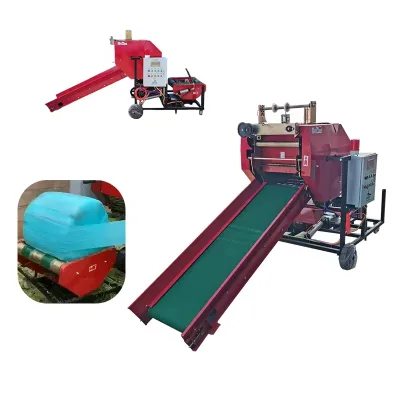
Procuring a semi-automatic round silage baler wrapper requires a disciplined approach that balances technical performance with supply chain reliability. The core keyword in this sector often refers to integrated systems where the baling and wrapping processes are linked but distinct, or standalone wrappers designed to handle round bales produced by semi-automatic balers. Based on the current market data, buyers are navigating a landscape where specific model numbers like the MCB-200A and the 9YDB-50 series indicate distinct operational capabilities. The observed price range of 1890 to 14000 USD suggests a significant variance in configuration, power source, and automation levels. This guide provides a structured framework for evaluating these machines, ensuring that procurement decisions are grounded in verified specifications rather than marketing assertions.
Technical Specifications and Operational Parameters
Understanding the technical architecture of a semi-automatic round silage baler wrapper is the first step in defining procurement requirements. The market data reveals a diversity in power configurations, with specific models listing supporting motor powers ranging from 3kw to 5.5kw, alongside options for tractor power sources. For instance, the 9YDB-50 series demonstrates a supporting motor power of 5.5kw with a rated speed of 280r/Min, while the 9YDB-50CY variant operates with a 3kw motor. These differences directly impact the throughput and energy efficiency of the system. Buyers must verify the voltage requirements, as the observed data indicates a standard of 380V 50Hz, though customization is frequently available to match local grid standards.
The physical dimensions and bale output are critical for facility planning. The observed bale sizes are standardized at 550520mm for certain models, while the overall machine dimensions vary significantly, ranging from 320017001600mm to 36001880*1850mm. This variance suggests that the footprint of the equipment is highly dependent on the specific model and its intended bale weight capacity. The weight of the bale itself is a crucial metric, with observed ranges spanning from 35kg to 100kg depending on the model and material density. For example, the 9YDB-50CY model targets a bale weight of 70-90kg, whereas other configurations support 60-100kg. The production efficiency is equally variable, with some units achieving 85pkts/H and others operating in the 50-70pkts/H range.
| Model Series | Supporting Motor Power | Rated Speed | Bale Weight Range | Production Efficiency | Dimensions (mm) |
|---|---|---|---|---|---|
| 9YDB-50 | 5.5kw | 280r/Min | 60-100kg | 85pkts/H | 320017001600 |
| 9YDB-50CY | 3kw | N/A | 70-90kg | 50-70pkts/H | 360018801850 |
| MCB-200A | 5.5+0.55+1kw | N/A | 35-85kg | N/A | 350015001600 |
| LB Series | Tractor/Custom | N/A | N/A | N/A | 130014001300 |
The data also highlights the importance of the wrapping mechanism. The number of wrapping film layers is a key performance indicator, with observed configurations supporting 2 to 4 layers. This directly correlates to the preservation quality of the silage and the mechanical complexity of the wrapper. Additionally, the aluminum roller quantity, noted as 30PCS in specific high-efficiency models, plays a vital role in the tension and uniformity of the wrapping process. Buyers should not assume these specifications apply universally; rather, they must confirm the exact configuration for the specific unit being sourced.
Compliance, Certification, and Safety Standards
In the global agricultural machinery market, compliance with international standards is non-negotiable for risk mitigation. The observed product data consistently lists CE and ISO certifications. These are not merely marketing labels but indicate adherence to specific safety and quality management protocols. The CE mark implies conformity with health, safety, and environmental protection standards for products sold within the European Economic Area, while ISO certification suggests a commitment to quality management systems. When evaluating a semi-automatic round silage baler wrapper, buyers must verify that the certification documents are current and applicable to the specific model and manufacturing location.
The origin of the machinery is a significant factor in compliance verification. The data indicates that products originate from China, with specific mentions of Henan as a manufacturing hub. While this location is a major production center, it necessitates rigorous due diligence regarding the supplier's ability to maintain consistent quality control standards. Buyers should request copies of the actual certification certificates and cross-reference the model numbers listed on the documents with the physical equipment. It is also essential to verify that the electrical components meet the voltage standards of the destination country, as the observed 380V 50Hz specification may require transformers or converters for regions with different grid frequencies.
Cost Drivers and Pricing Structure
The price range of 1890 to 14000 USD reflects the wide spectrum of features and capabilities available in this category. Several factors drive these costs. First, the power source is a primary determinant; units powered by dedicated electric motors often differ in price from those designed to be PTO-driven by tractors. The 9YDB-50 series, with its specific motor configurations, likely occupies a different price tier compared to the tractor-powered LB series. Second, the automation level significantly impacts cost. A semi-automatic system that requires manual intervention for film loading or bale positioning will generally be less expensive than a fully automated line, yet the observed "Customization: Available" attribute suggests that buyers can pay a premium for tailored automation levels.
The packaging and shipping logistics also contribute to the final cost. The observed data lists various packing methods, including "Export Standard Wooden Case," "Wooden Box," and "Container." The choice of packaging affects the protection of the machinery during transit and the associated freight costs. A machine packed in a container may incur higher initial costs but offers better protection for long-distance shipping, whereas a wooden case might be more economical for regional distribution. Furthermore, the weight of the machine, ranging from 510kg to 750kg, influences freight charges. Buyers must factor in these logistical costs when comparing the base price of 1890 USD against the higher-end 14000 USD models.
Typical Applications and Material Compatibility
The versatility of semi-automatic round silage baler wrappers is a key selling point, with applications spanning manufacturing plants, farms, and home use. The observed data specifies suitability for a wide range of materials, including hay, rice stalks, alfalfa, grass, and silage. This adaptability makes the equipment valuable for diverse agricultural operations. For instance, the LB model is explicitly noted as suitable for corn straw silage, while other models are optimized for rice straw. The capacity to handle different biomass types depends on the machine's mechanical design, such as the aluminum roller quantity and the tensioning system.
The production efficiency metrics, such as 50-70 bales per hour or 4000-5000kg per hour, provide a benchmark for operational planning. Buyers must align these figures with their expected harvest volumes. A farm producing large quantities of rice straw may require the higher efficiency models, while a smaller operation might find the 50pkts/H capacity sufficient. The "Applicable" attribute listing "Home Use" alongside "Manufacturing Plant" indicates that these machines are scalable. However, the "Semi-Automatic" nature implies that labor availability is a constraint; buyers should ensure they have the workforce to manage the manual aspects of the process, such as film application and bale movement.
Supplier Evaluation and Quality Assurance
Evaluating suppliers requires a focus on their ability to deliver consistent quality and support. The observed "Customization: Available" attribute is a strong indicator of a supplier's flexibility, but it also demands clear communication regarding the scope of work. Buyers should verify the supplier's experience with the specific model numbers mentioned, such as the 9YDB-50 or MCB-200A. The warranty period, observed as 1 Year, is a standard baseline, but buyers should negotiate terms that cover critical components like motors and hydraulic systems.
Quality control should be a central part of the procurement process. Given the variance in machine weights and dimensions, buyers should request detailed technical drawings and material specifications before finalizing the order. The "Export Standard Wooden Case" and "Container" packing options suggest that the supplier is experienced in international logistics, but buyers must verify the condition of the packaging upon arrival. Additionally, the "Production Efficiency" and "Bale Weight" claims should be validated through on-site testing or third-party verification if possible. The presence of certifications like CE and ISO provides a foundation for trust, but they do not guarantee the performance of every individual unit.
Long-Term Procurement and Maintenance Considerations
Long-term success with a semi-automatic round silage baler wrapper depends on maintenance and spare parts availability. The "Warranty: 1 Year" is a starting point, but buyers should plan for ongoing maintenance costs. The power source, whether electric or tractor-driven, dictates the type of maintenance required. Electric motors may require less frequent maintenance than PTO-driven systems, but they are susceptible to electrical issues. The "Voltage: 380V 50Hz Can Customize" attribute highlights the need for electrical compatibility checks to prevent damage to the motor.
The "Wrapping Film Layer: 2-4layers" specification also has long-term implications. Buyers should establish a supply chain for compatible wrapping films to ensure consistent bale quality. The "Weight of Bale: 35-85kg" range indicates that the machine is designed for specific bale densities; using materials that exceed these limits could lead to premature wear. Finally, the "prod_packing" details, such as the wooden case or container, should be reviewed to ensure that the machine is stored and transported in a way that minimizes corrosion and damage during idle periods. By focusing on these long-term factors, buyers can ensure that their investment in a semi-automatic round silage baler wrapper delivers sustained value and operational efficiency.
FAQs
What certifications do semi automatic round silage baler wrappers have?
These machines typically hold CE and ISO certifications. The observed data confirms CE and ISO marks are present on models like the MCB-200A and 9YDB-50 series, indicating compliance with safety and quality standards for international trade.
Which power sources are available for these baler wrappers?
Units can be powered by electric motors or tractor PTOs. Specific models like the 9YDB-50 use 5.5kw motors, while the LB series is designed for tractor power sources, offering flexibility for different farm setups.
How much does a semi automatic round silage baler wrapper cost?
Prices range from 1890 to 14000 USD depending on configuration. The variance reflects differences in power source, automation level, and specific model features like the 9YDB-50CY versus the MCB-200A series.
Can I customize the voltage for these machines?
Yes, voltage customization is available for these units. While the standard specification is 380V 50Hz, the product attributes explicitly state that voltage can be customized to match local grid standards in different regions.
What is the production efficiency of the 9YDB-50 model?
The 9YDB-50 model achieves a production efficiency of 85 pkts per hour. This high output is supported by a supporting motor power of 5.5kw and a rated speed of 280r/Min for optimal performance.
What are the standard dimensions for these round baler wrappers?
Dimensions vary by model, ranging from 3200 to 3600mm in length. For instance, the 9YDB-50 measures 3200*1700*1600mm, while the 9YDB-50CY is larger at 3600*1880*1850mm, affecting facility footprint requirements.